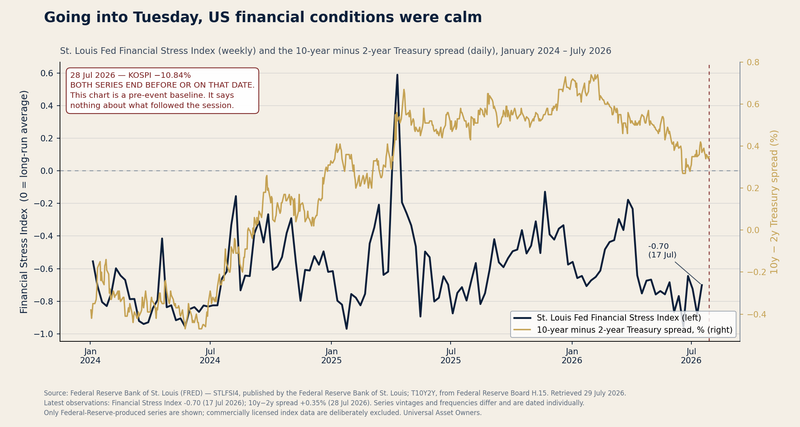
Nobody Publishes That Number
Korea's benchmark fell 10.84% on Tuesday. The BIS published, the same day, that lending to AI firms is 8% of all private credit. The Bank of England will not tell you the level of the leverage connecting the two.
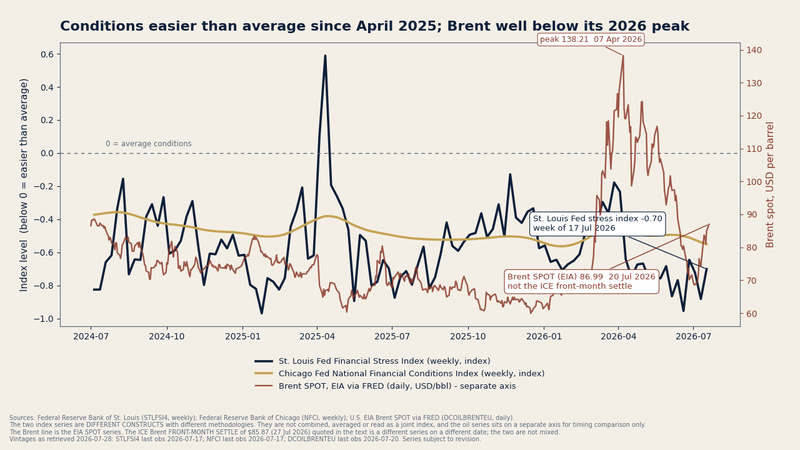
Coverage, charts, video and research on Daily Brief for universal owners.
Korea's benchmark fell 10.84% on Tuesday. The BIS published, the same day, that lending to AI firms is 8% of all private credit. The Bank of England will not tell you the level of the leverage connecting the two.
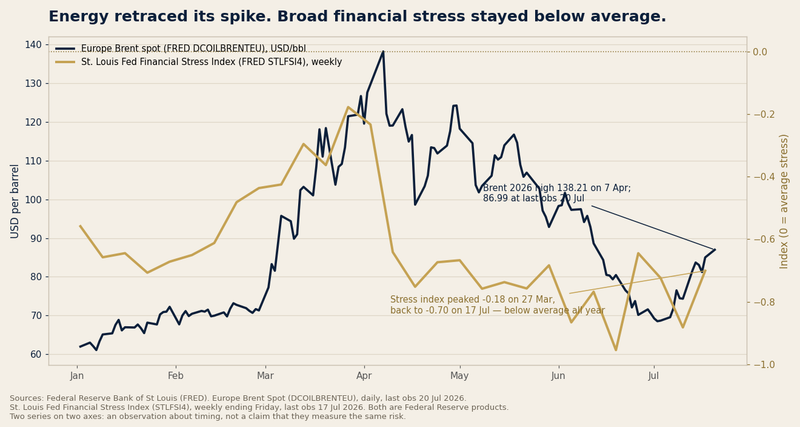
Two disclosed components. One of them has no published terms at all.
Three of the largest capital structures announced in 72 hours were not purchases. They were guarantees, leases and frameworks — while marine insurance walks away from Hormuz.
View this email in your browser — the full web edition with the video briefing, The Allocator and the podcast playerThe Universal OwnerUAO
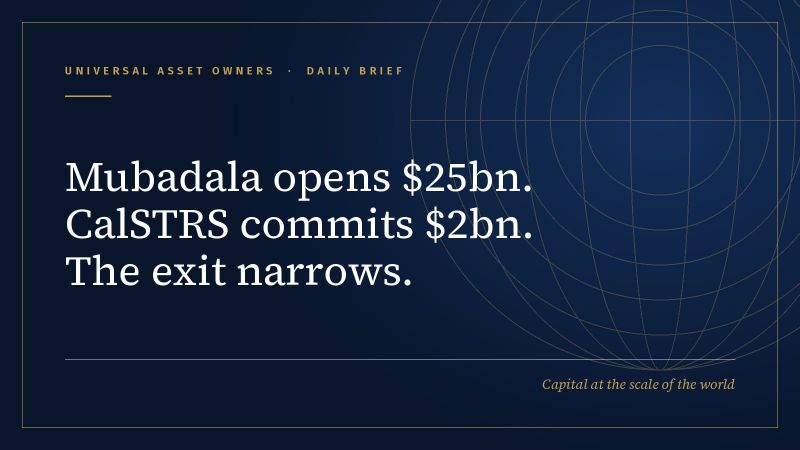
UK fiscal risk lifts long yields while Townsend raises $2bn+ for real-estate secondaries; Mubadala opens an existing $25bn credit book to outside capital and CalSTRS commits up to $2bn.
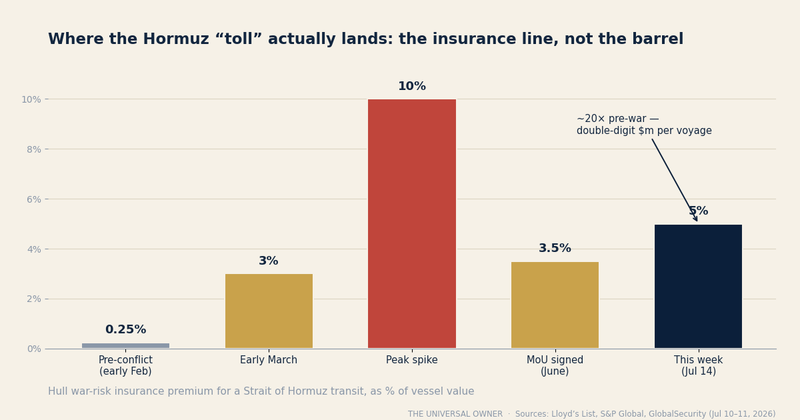
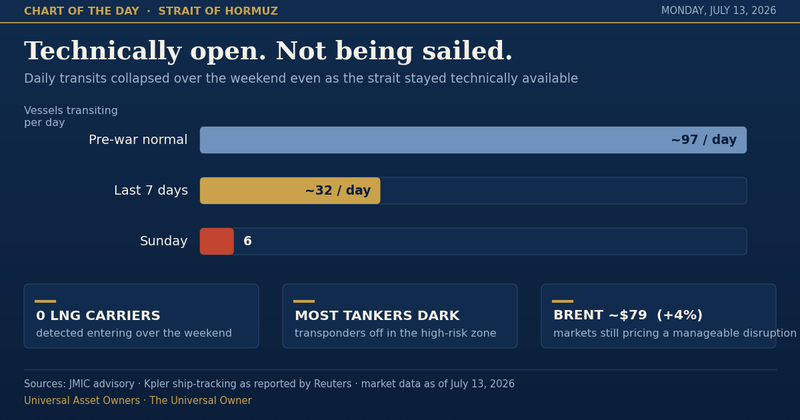
Hormuz shifts from supply disruption to an administered corridor — a scheduled blockade, a proposed 20% toll, and the war-risk insurance line where the price is actually paid. Plus Typhoon Bavi, CalPERS's 14.8%, and a 72-hour watchlist.
Why the Strait's private toll is underpriced, Ukraine's second chokepoint front, and a week-long heat stress test for the AI power trade.
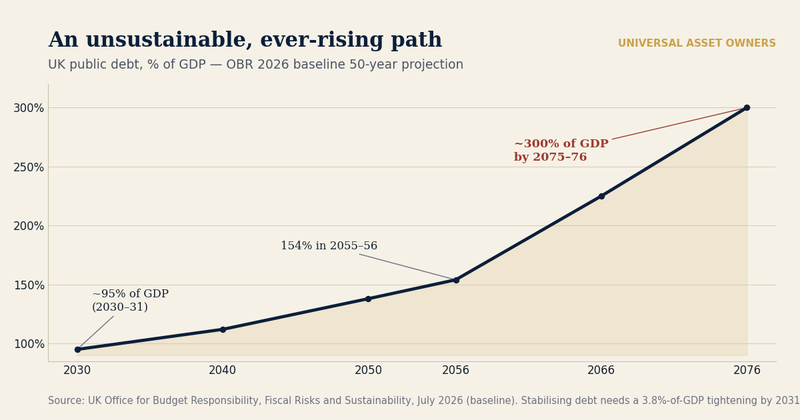
NATO's 5%-of-GDP defense-investment commitment and the OBR's unsustainable-debt warning converge with the Hormuz oil shock on one of a universal owner's least-diversifiable exposures: long-dated government debt.
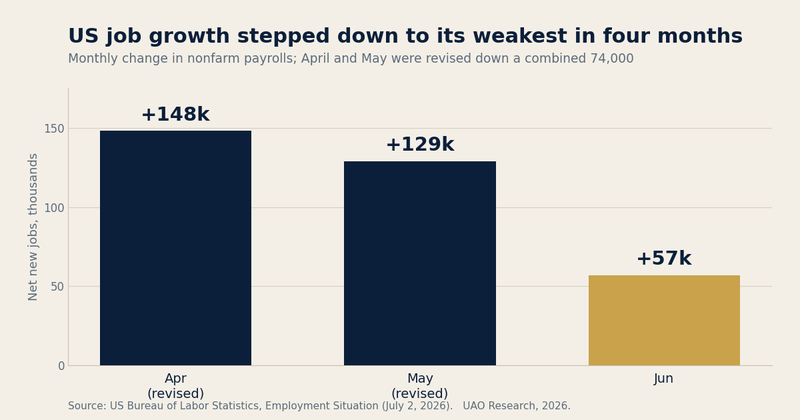
June payrolls came in at +57k — but the story is the 74k in downward revisions, a $29tn sovereign rotation, a new grid ownership model, and private credit gating again.
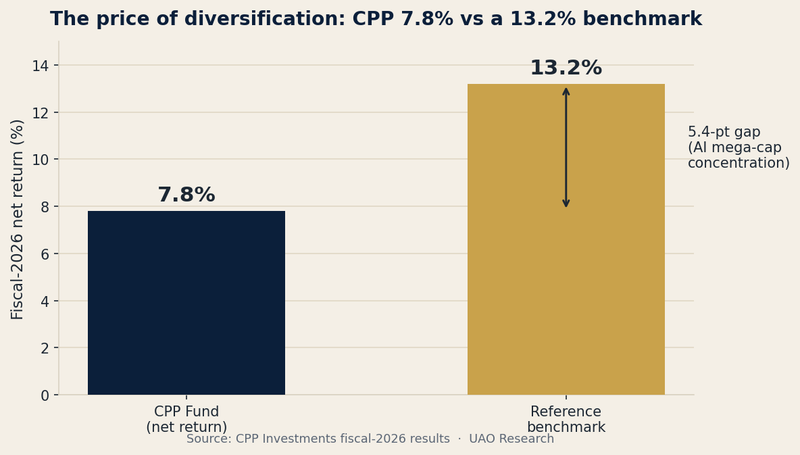
H1 2026 closed with diversification working - but the breadth had migrated to Asia and may already be the next concentration trade.
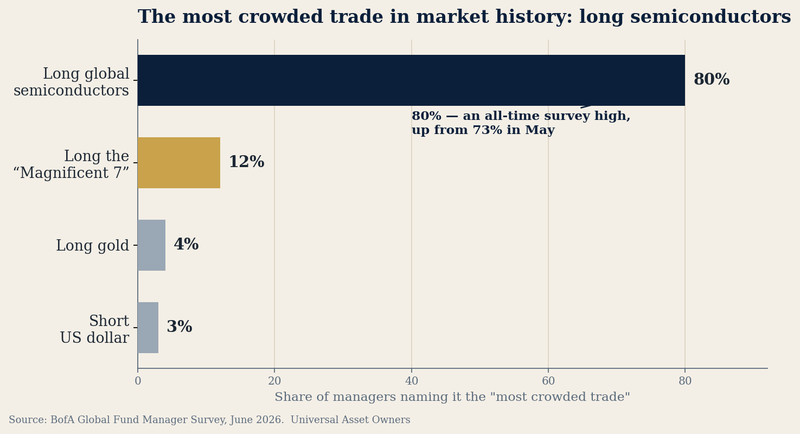
BofA calls semiconductors the most crowded trade in its survey history. The real question is how many times one fund owns the same risk.
The most crowded trade in history is now "long semiconductors" — the same theme the world's sovereigns are concentrating into. What that means for a universal owner.
Research, charts, video and podcast analysis for the institutions investing at the scale of the world.
Five minutes, five days a week. Complimentary — subscriptions are reviewed by our editorial desk, and you'll receive a notice once approved.
You’re on the list. Tomorrow’s brief will arrive in your inbox.
Please enter a valid email.