| View this email as a web page |
The Universal Owner UAO Daily Brief · Fri, July 17, 2026 · Vol 1, Issue 63 |
 |
Watch · Today's briefing  The market has stopped charging for the war — watch the ~1.5-minute briefing on the web edition. |
| |
The Film · today's short feature The Decoupled Tape  The war the market refuses to price, in five cinematic minutes. Watch The Film → |
The Lead The market has stopped charging for the war Wednesday night was the sixth consecutive night of U.S. airstrikes on Iran — the first to reach targets near Tehran, per Iranian state media (CNN). A tanker was hit near Kharg Island; Iran answered against U.S.-used bases in Kuwait, Bahrain and Jordan (Al Jazeera). Hormuz traffic — a fifth of world oil and LNG — kept dwindling (Bloomberg). And the market's bill for all of it: Brent settled at ~$84.63, down 0.37%. VIX 15.67. High-yield spreads 2.71%. BofA's July survey finds the most bullish positioning since February with cash at 3.6% — below the bank's own 4.0% sell signal (Reuters). Yesterday we warned the energy-led disinflation survives only until it meets Gulf risk. It met it — and the tape barely moved. The risk premium has migrated: out of the assets, into the physical world the assets depend on, unpriced. |
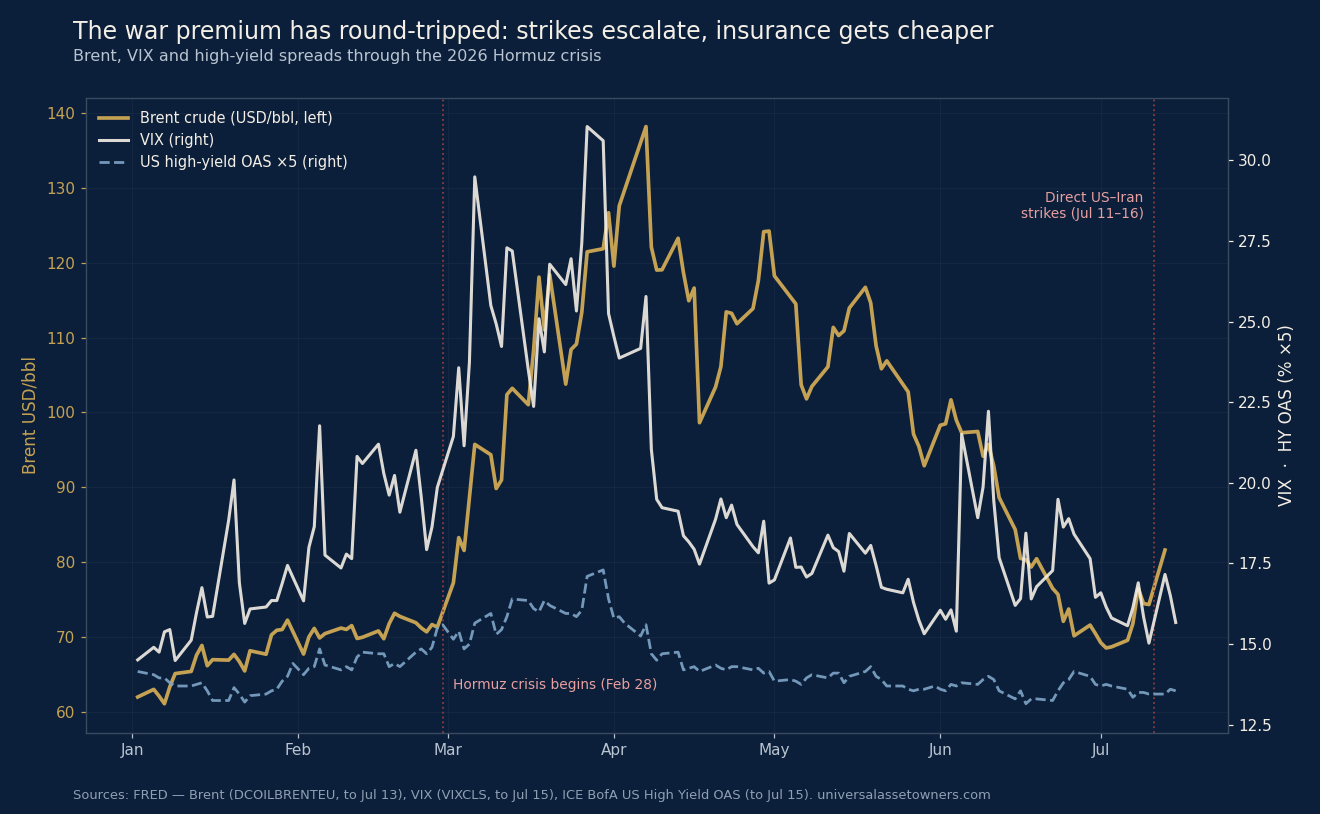 Chart of the day: Brent $138 → mid-$80s, VIX 31 → 15.67, HY spreads to 2.71% — while the strikes escalated. Sources: FRED (to Jul 15). |
A record quarter met a full market: TSMC's 77% problem TSMC grew net income 77.4% y/y on $40.2bn revenue, with a 67.7% gross margin and raised guidance (TSMC, Jul 16) — and the stock fell more than 4%, dragging the Nasdaq down 1.47%. The same BofA survey found "AI bubble" the top-cited tail risk for the first time. When the marginal buyer is fully invested, record fundamentals stop moving prices — positioning does. The cash-flow story is a decade trade; the pricing story is a quarter trade wearing its clothes. |
Macro — strong data, hawkish voices June retail sales +0.2% (ex-autos −0.2%), claims 208k (below consensus), Philly Fed 41.4. Dallas Fed's Logan, verbatim: "I currently believe modestly higher interest rates would better balance the outlook and risks for the FOMC's dual mandate goals." Funds target stays 3.5–3.75% (Fed MPR, Jul 10). Strong data + hawkish tilt + a war-adjacent energy tape is exactly what stresses "cuts are coming" positioning. And it is not only American: the Bank of Korea hiked 25bp to 2.75% — its first increase in 3.5 years — citing inflation driven by war-elevated oil and a weak won (BOK, Jul 16). A central bank at the heart of the AI supply chain just started tightening because of the war the tape refuses to price. |
Capital-flow watch — the sovereign bid under the crowded trade (Past two weeks, carried as structural backdrop — not breaking news.) Who buys when fund managers are out of cash? Sovereign capital: $15.1tn across 109 funds (+14%), tilting to national priorities — AI, infrastructure, energy security (Reuters/IE-ICEX, Jul 9). Gulf funds deployed a record $53.9bn in 1H26 — through the war (Global SWF); Mubadala led at $15.2bn; MGX closed a ~$49bn AI fund (Forbes). A buyer that doesn't respond to price is why premiums stay compressed — and why they reprice violently when the policy bid pauses. The bid showed up in fresh mandates this week: Taiwan's BLF awarded a $3bn climate-transition infrastructure mandate to five global managers — benchmarked ex China (BLF, Jul 16); and Churchill closed a ~$400m CFO with Temasek's Seviora, pairing U.S. junior capital with Asian private credit (Dechert). People & mandates: OTPP named Cathy Cranston Board Chair, eff. Jan 2027 (OTPP). |
Risk Radar — dated physical & systemic signals Hormuz weather: wind 42 km/h, gusts 58 (Jul 17) — friction on top of the blockade. Mayon volcano (GDACS Orange, Jul 16) — Luzon watch. Droughts: Horn of Africa, Madagascar, and a Europe-wide event (GDACS) — the driver behind Rhine-water-level risk. Cyber: actively exploited SharePoint, FortiSandbox and AD FS CVEs added to CISA's KEV — an enterprise identity-layer cluster. Seismic: M5.9 Te Anau NZ, M5.2 Myanmar (USGS) — background. Space weather: NOAA K-4 (below G1) — background. Explore the live Risk Map — every signal, updated daily → |
Today's deep dive Who Is Still Charging for Risk? 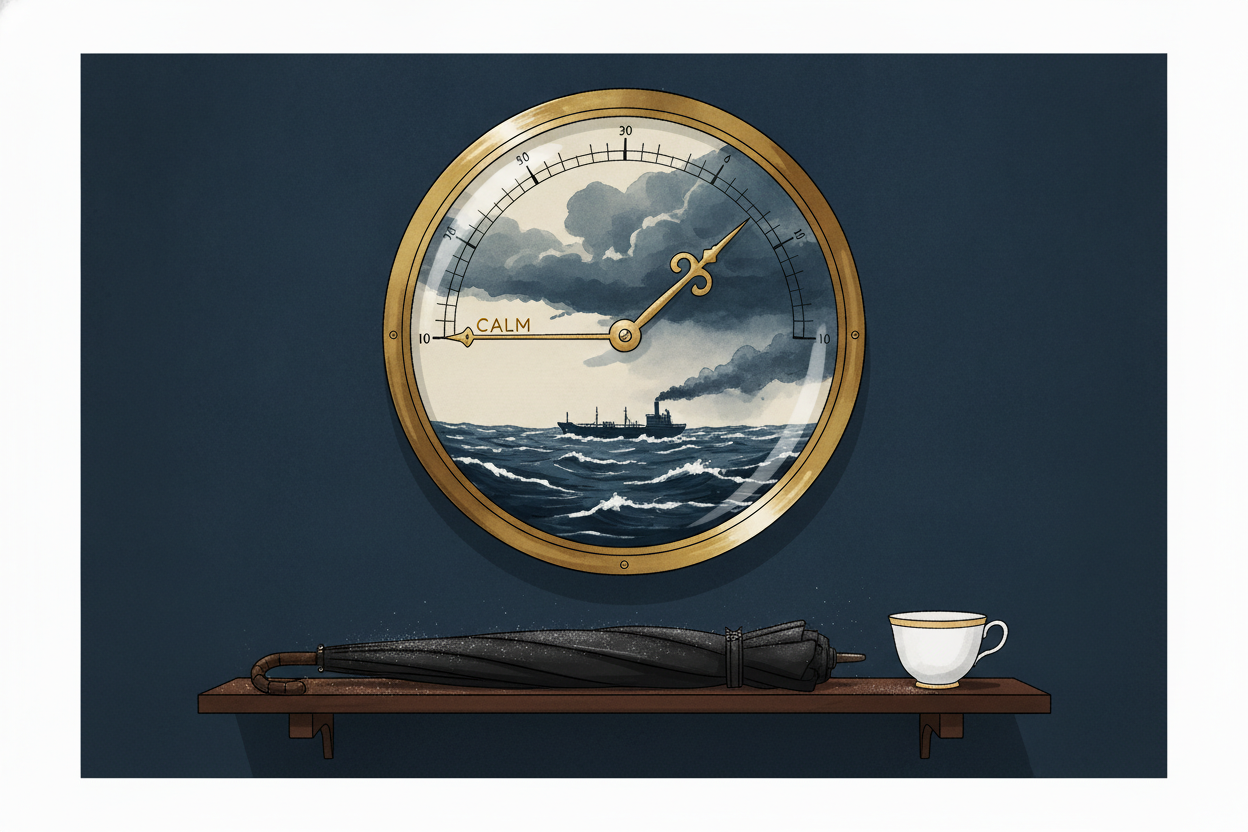 War-risk premiums, credit spreads, volatility and cash buffers all compressed while a shooting war runs at the world's most important chokepoint. The three mechanisms that silenced the premium — and the four moves an owner makes while insurance is still cheap. Read the deep dive → |
|
Today's scenario · interactive 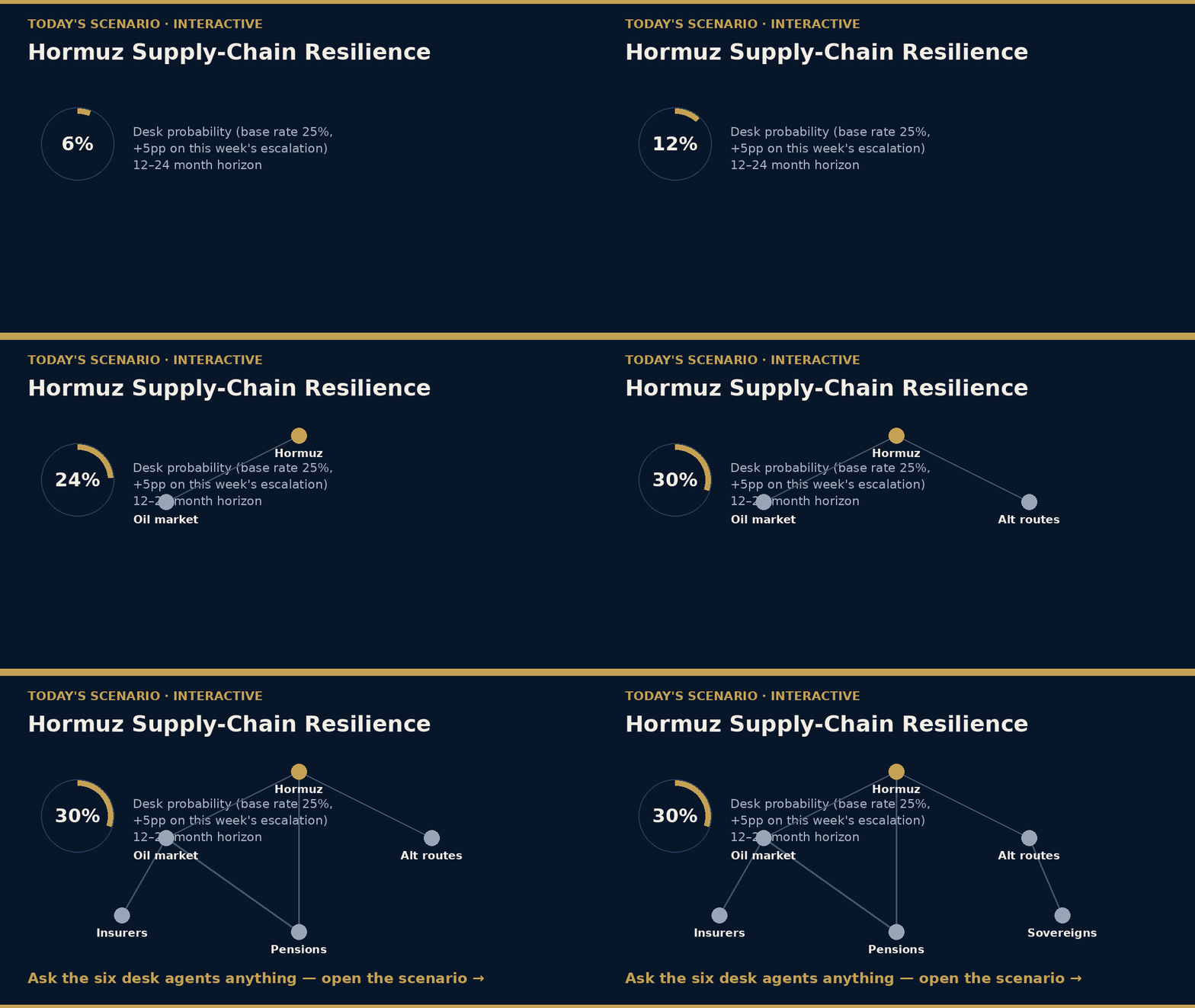 Hormuz Supply-Chain Resilience. Can alternative routes blunt a prolonged closure — or does every workaround still price off the strait? Six desk agents take questions. Desk probability 30% (base rate 25%, +5pp on this week's escalation). Open the interactive scenario → |
Sponsor · AssetOps by Corinium AssetOps — where the buy-side operating layer meets. The COO, operations, data and technology leaders behind the world's largest allocators gather at AssetOps Chicago on 11 August 2026, at the DoubleTree by Hilton – Magnificent Mile. Solve the operating problems scale can't out-invest. |
|
From the research desk · paid research, complimentary sample Underwriting the Abyss — Lloyd’s, war-risk insurance and the capital bottleneck at Hormuz 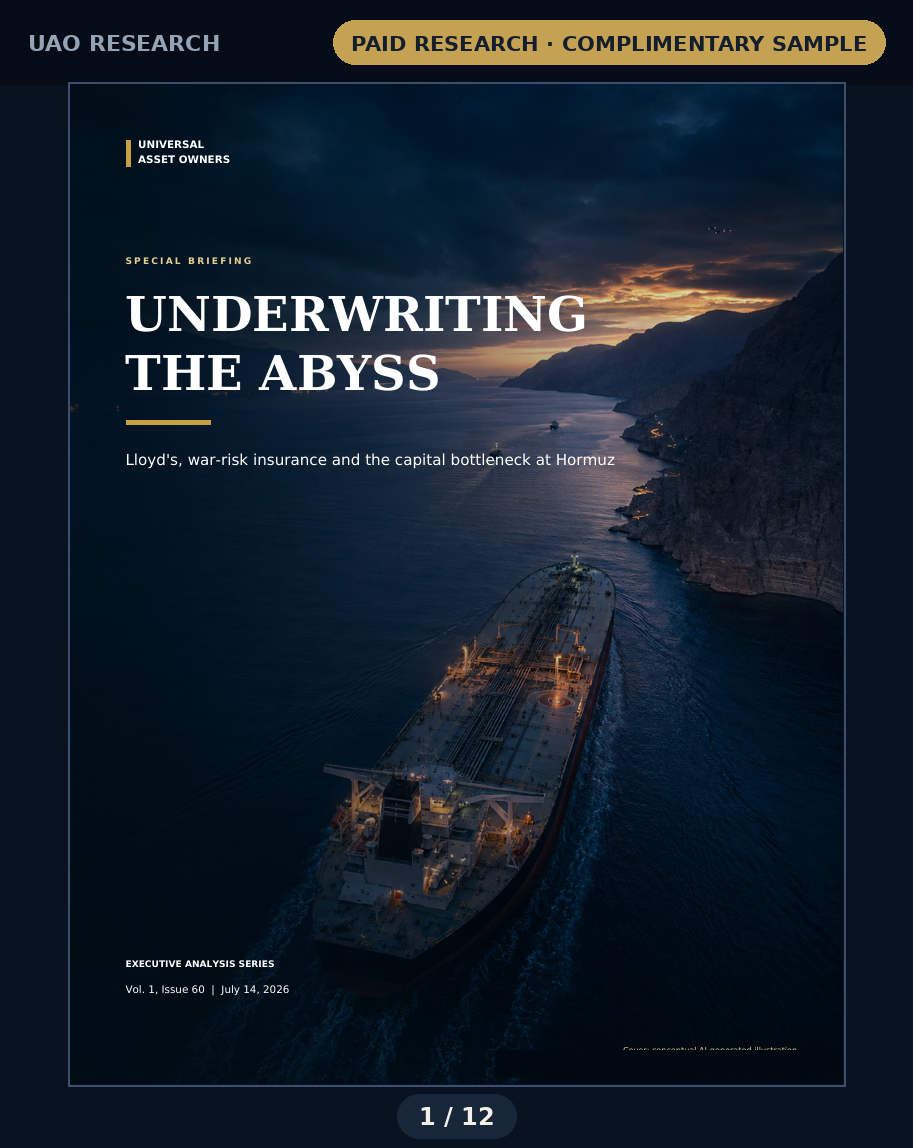 Today’s lead argues the market has stopped charging for the war. This 12-page special briefing shows the one market that never stopped: Lloyd’s and the war-risk underwriters repricing the strait daily. A complimentary sample of UAO’s paid research. Read the full briefing → |
|
The Risk Map · one frame 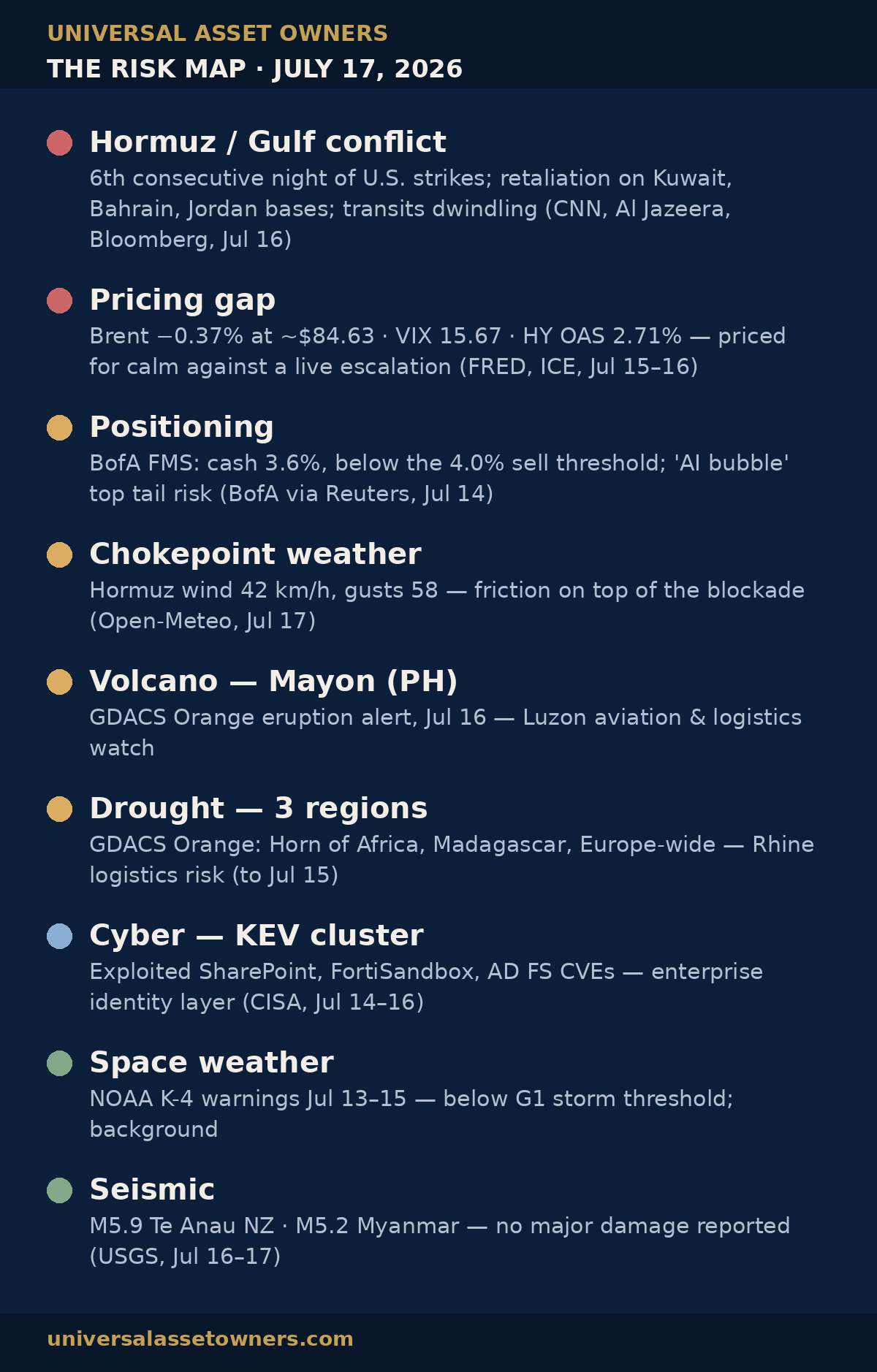 A live Gulf escalation, the pricing gap that ignores it, and the physical-layer signals underneath — the edition in one frame. Open the live Risk Map → |
| |
Podcast · The Universal Owner  Today's episode (~6.5 min): who is still charging for risk — the two tapes, the three mechanisms, and the TSMC experiment. Sponsored by AssetOps Chicago, by Corinium. |
| |
The Debate · two views, argued hard Why Markets Ignore the Gulf War  |
| |
The Extended Listen · today's long feature Where the Risk Premium Went  The long-form audio feature (~10 min): positioning, industrialised insurance, and the buyer who never asks the price. Listen on the web edition → |
The Back Page with The Allocator Meet The Allocator: UAO's resident everyman of institutional capital — he owns a small piece of nearly everything, is pitched by everyone, and is rarely surprised, only disappointed by the footnotes. 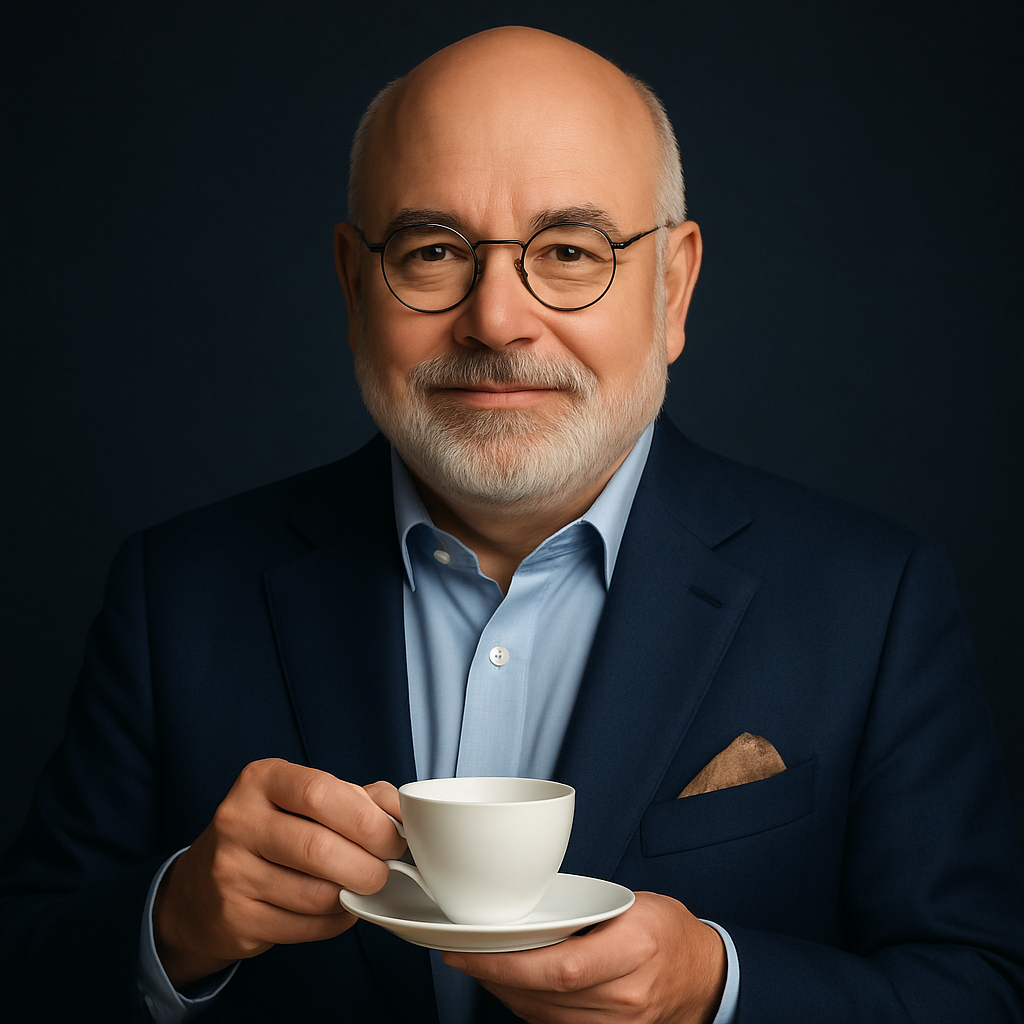 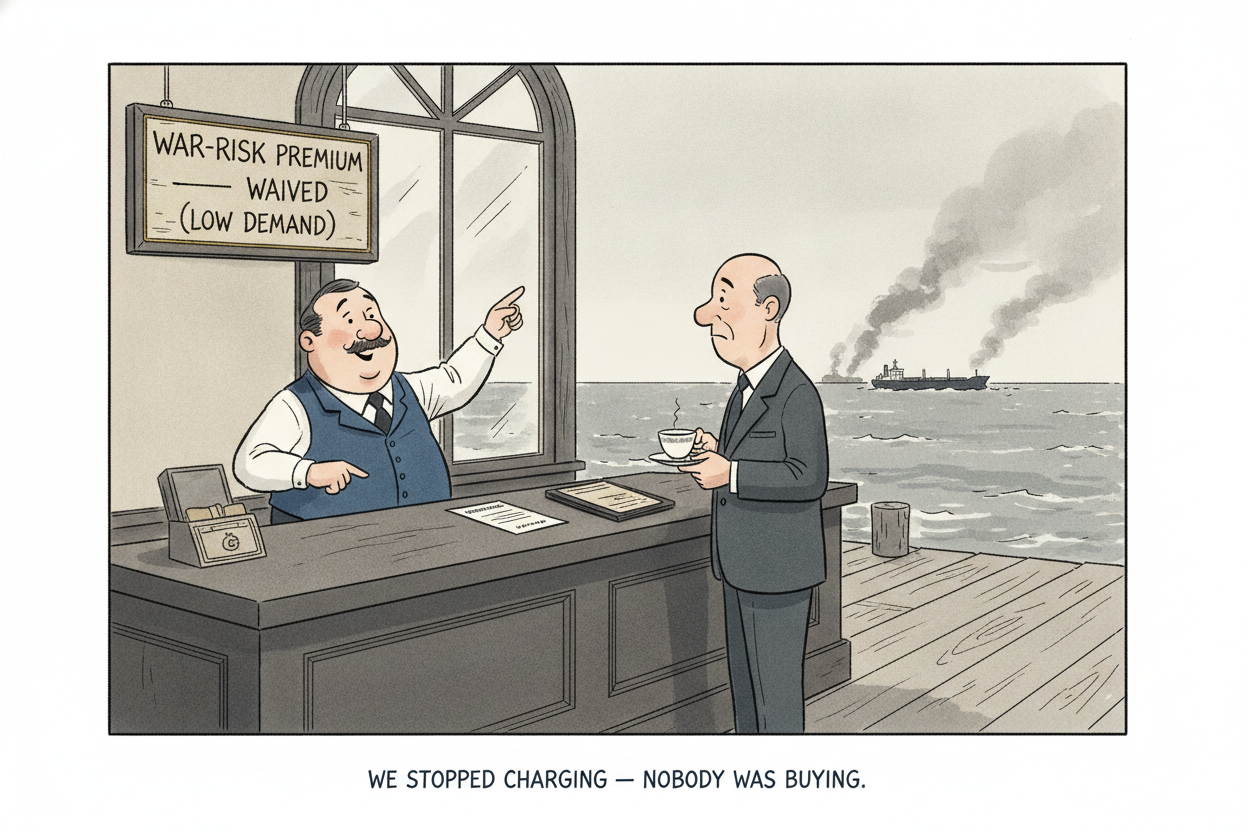 "We stopped charging — nobody was buying." The Allocator — a UAO editorial character. When insurance is priced for calm against a risk this visible, the discount is the story. |
The Universal Owner
|


