404.5m barrels. 23.3 days. Thinner cover than September 2018.
Refineries ran harder into a falling stock level - and three Reserve Bank presidents voted to tighten.
Refineries ran harder into a falling stock level - and three Reserve Bank presidents voted to tighten.
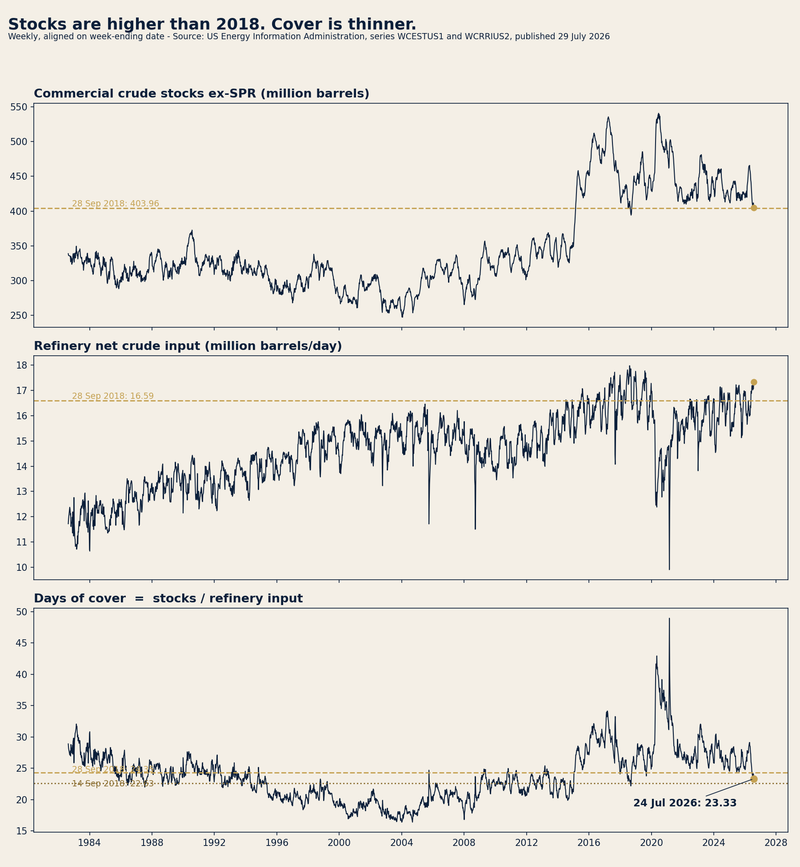
Crude stocks are marginally higher than the September 2018 week everyone is citing - but refineries are drawing 745,000 barrels a day harder, so cover is a full day thinner. Three FOMC voters wanted a hike.
Three weeks before Korea fell, the Bank of England described how a semiconductor drawdown could reach a gilt portfolio. The level is not in the report.
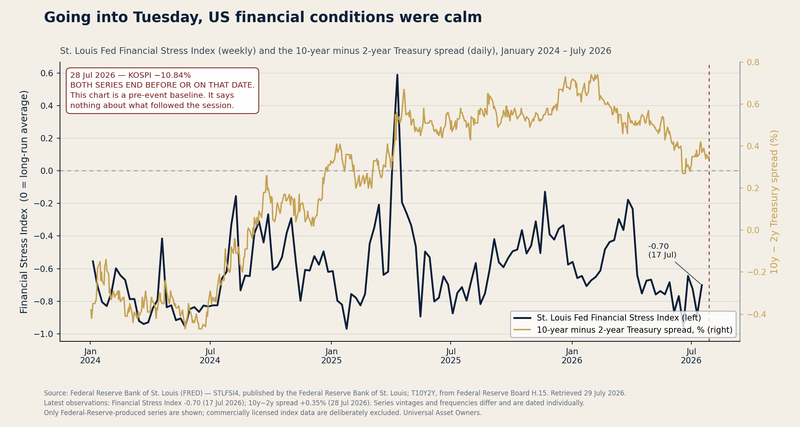
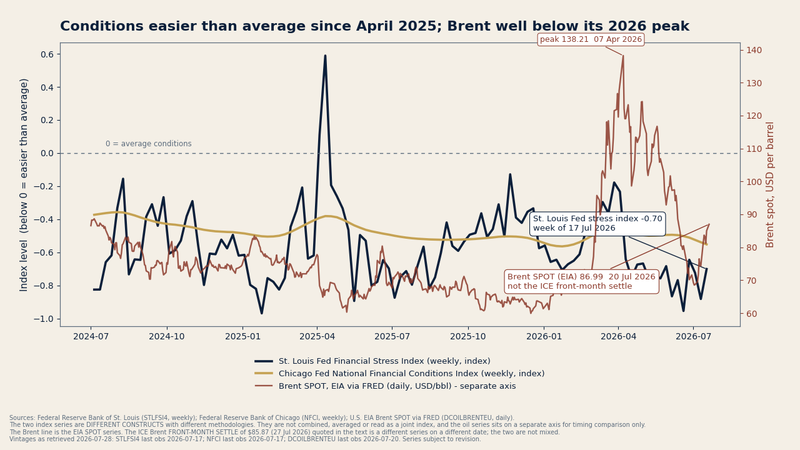
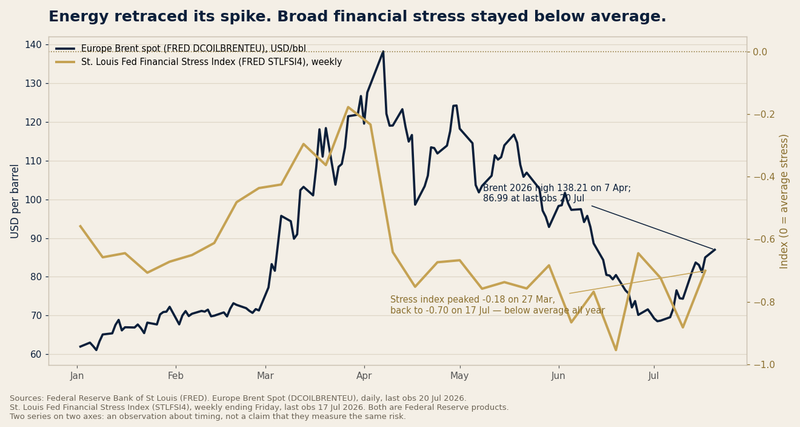
Korea's benchmark fell 10.84% on Tuesday. The BIS published, the same day, that lending to AI firms is 8% of all private credit. The Bank of England will not tell you the level of the leverage connecting the two.
A $31.2bn surplus took the first-loss tranche. The other half of the deal has no published terms.
Two disclosed components. One of them has no published terms at all.
Three of the largest capital structures announced in 72 hours were not purchases. They were guarantees, leases and frameworks — while marine insurance walks away from Hormuz.
Two chokepoints, one repricing: the case for owning optionality.
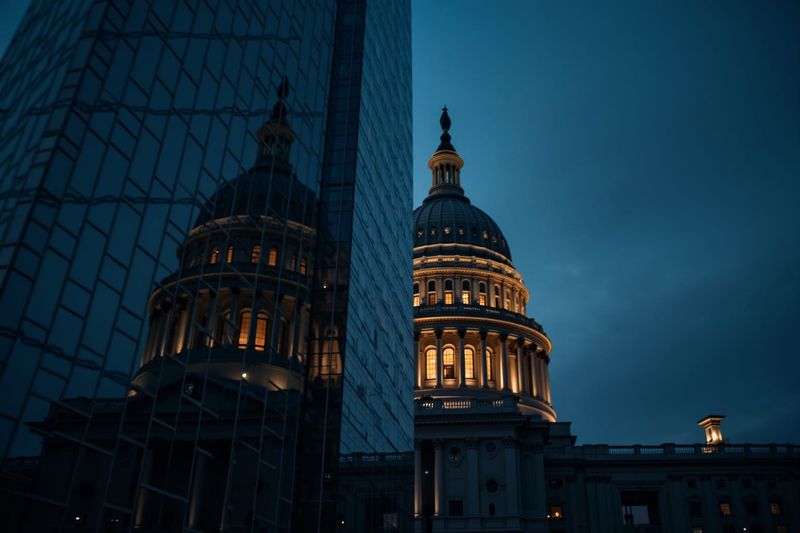
Governments are taking equity, underwriting demand and backing strategic projects in sectors they also regulate. Universal owners need rules for the moment the state becomes shareholder, customer and rule-maker at the same time.
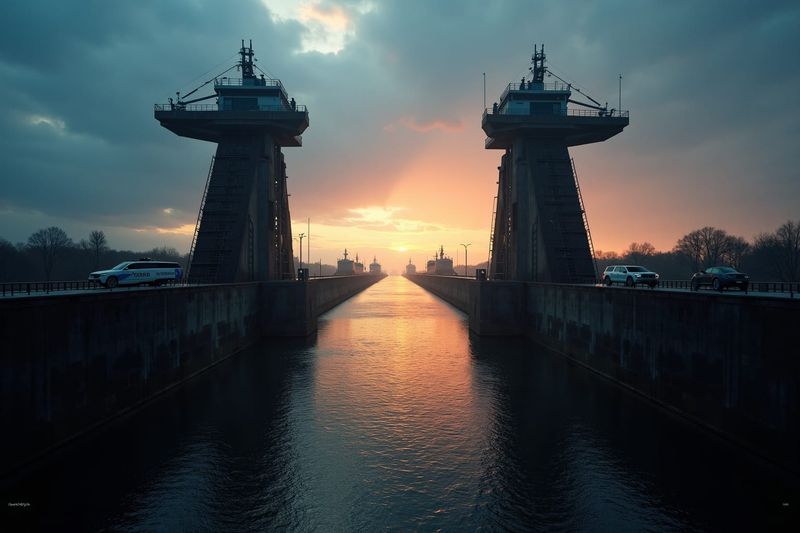
The recent limits do not yet amount to a system-wide credit crisis. They reveal the bargain inside semi-liquid funds: the loan portfolio is protected by making investors wait, find another buyer or accept a discount.

Private markets remain a structural advantage for long-horizon capital. The danger is that capital calls, benefit payments, collateral demands and withdrawal requests can stop behaving like separate risks when public markets fall.
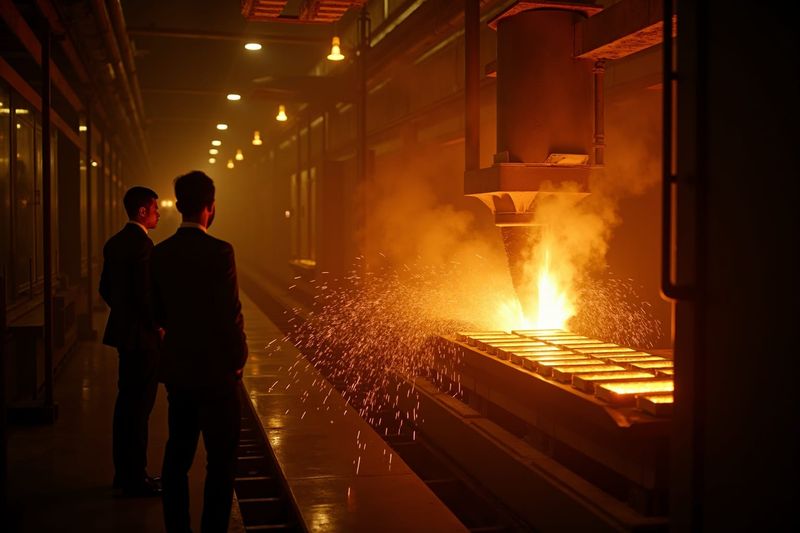
The shift is real, but it is not one model. Project co-investors, strategic holding companies and proposed savings funds carry different mandates - and different risks for foreign capital sitting beside them.