Nobody Publishes That Number
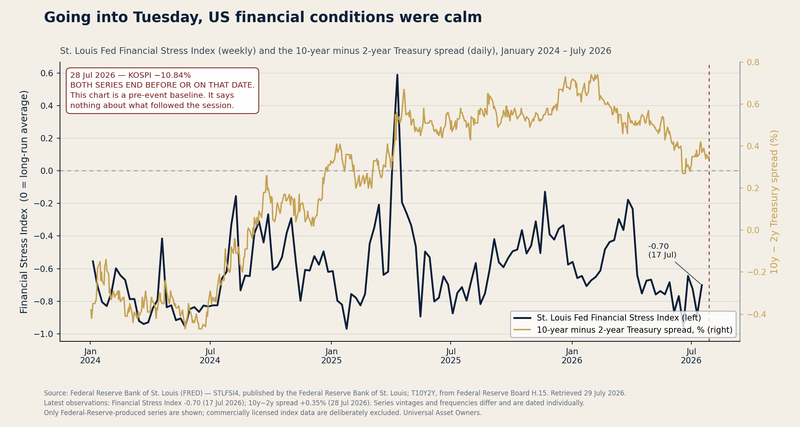
Korea's benchmark fell 10.84% on Tuesday. The BIS published, the same day, that lending to AI firms is 8% of all private credit. The Bank of England will not tell you the level of the leverage connecting the two.

Direct lending, the systemic question, and the search for floating-rate yield.
Korea's benchmark fell 10.84% on Tuesday. The BIS published, the same day, that lending to AI firms is 8% of all private credit. The Bank of England will not tell you the level of the leverage connecting the two.

The recent limits do not yet amount to a system-wide credit crisis. They reveal the bargain inside semi-liquid funds: the loan portfolio is protected by making investors wait, find another buyer or accept a discount.
Private markets promised long-horizon investors an illiquidity premium. They did not promise that capital calls, redemptions, collateral, distributions, and sponsor demands would remain separate events.
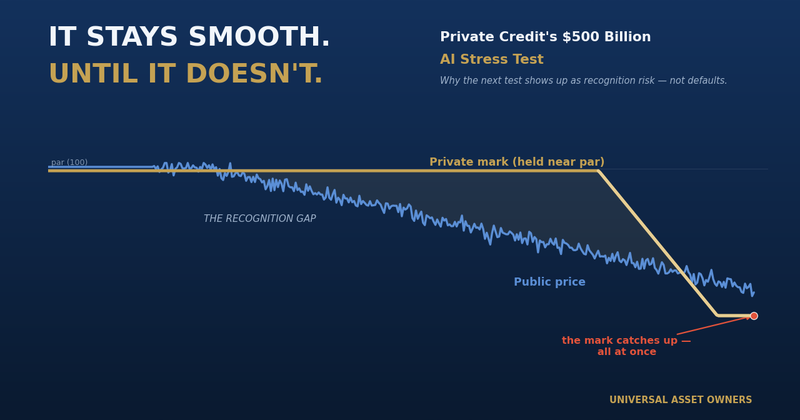
Software became direct lending's favourite trade. Now AI is repricing software economics in real time — and the first cracks will show up not as defaults, but as recognition risk. What universal owners must ask now.
For two years the AI build-out has been an equity story — a thing universal owners owned, through their Nvidia and hyperscaler
Research & Commercial Insight · June 22, 2026 · UAO Research There is a tidy story large allocators have told themselves about artificial intelligence:
A practical checklist for committees: separate skill from leverage and illiquidity premia, stress your own liquidity assuming gates, and read the covenant package before the yield.
Research, charts, video and podcast analysis for the institutions investing at the scale of the world.
Five minutes, five days a week. Complimentary — subscriptions are reviewed by our editorial desk, and you'll receive a notice once approved.
You’re on the list. Tomorrow’s brief will arrive in your inbox.
Please enter a valid email.