
Build the CIO, or Rent One?
CalPERS builds the CIO; British Coal rents one from BlackRock; QIA buys the manager; MGX and OpenAI contest the AI cap table; reserve managers re-route the pipes beneath the dollar.
CalPERS builds the CIO; British Coal rents one from BlackRock; QIA buys the manager; MGX and OpenAI contest the AI cap table; reserve managers re-route the pipes beneath the dollar.
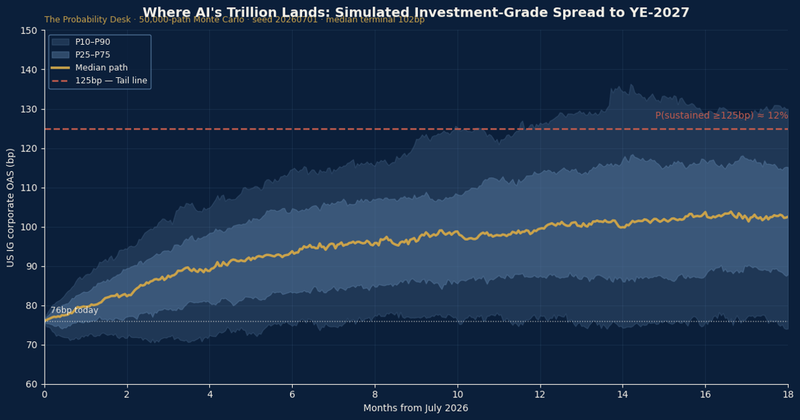
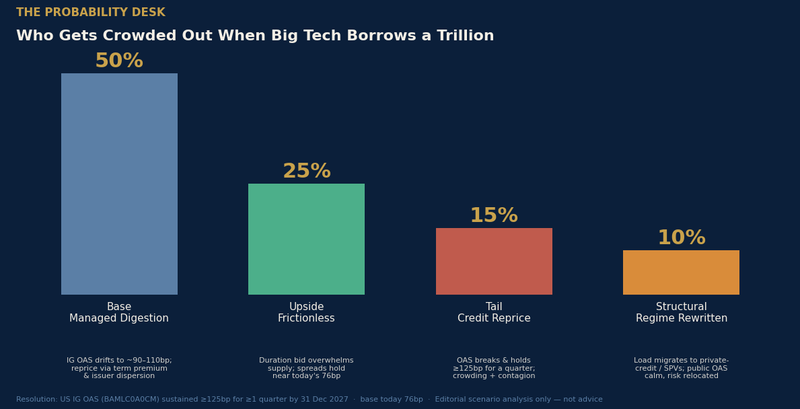
Who Gets Crowded Out When Big Tech Borrows a Trillion The Probability Desk — Wednesday, July 1, 2026 Desk view in one paragraph.
UNIVERSAL ASSET OWNERS The UAO Daily Brief Volume 1, Issue 49 · Wednesday, July 1, 2026 · 7:00am ET / 15:00 GST PENSION
The desk is tracking 10 structural risks at a combined radar load of 7.9/100. Geopolitical chokepoint concentration is today's highest-priority exposure.
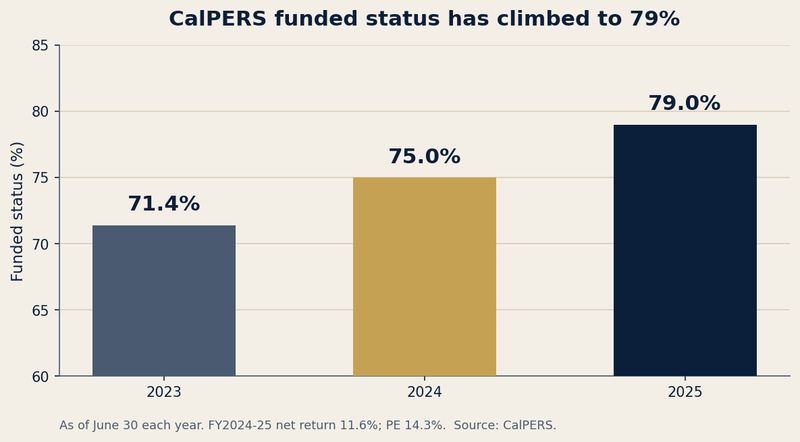
The funded status of the largest U.S. public pension frames the allocation problem every universal owner shares: a long-horizon liability that a single year's return can move only so far.
CalPERS retires strategic asset allocation for a Total Portfolio Approach.
Stewardship codes formalize institutional investor responsibilities for active ownership and corporate governance engagement. The UK's 2010 code and Japan's 2014 adoption established benchmarks now influencing frameworks across Asia, Europe, and North America.
Institutional investors deploy shareholder activism to influence corporate strategy and governance. Major asset owners use voting power, board engagement, and public pressure campaigns to address underperformance, environmental risks, and governance failures.
Green bonds fund renewable energy and climate infrastructure, while sustainability-linked bonds align borrowing costs with corporate ESG performance metrics. Both serve institutional asset owners managing climate transition risk.
The Science Based Targets initiative establishes methodology for organizations to set greenhouse gas reduction targets grounded in climate physics and net-zero pathways. Institutional investors increasingly require portfolio holdings and managers to achieve SBTi validation.
Carbon pricing mechanisms impose material financial costs on carbon-intensive industries, creating valuation headwinds and stranded asset risks. Institutional investors must systematically evaluate transition risks and reposition portfolios across equity and fixed income allocations.