CPP takes $5.2bn private. GIP closes $40bn. Then the grid lost 3GW.

Alphabet's cash went negative on a $205bn AI plan — the same week 3 gigawatts left the grid in ten minutes.

View this email as a web page
The Universal Owner
UAO Daily Brief · Thu, July 23, 2026 · Vol 1, Issue 68
AssetOps Chicago — August 11, 2026 — Register
Watch · Today's briefing
Watch the briefing
The Load That Disappeared — watch the ~3-minute briefing on the web edition.
The Lead
The Load That Disappeared

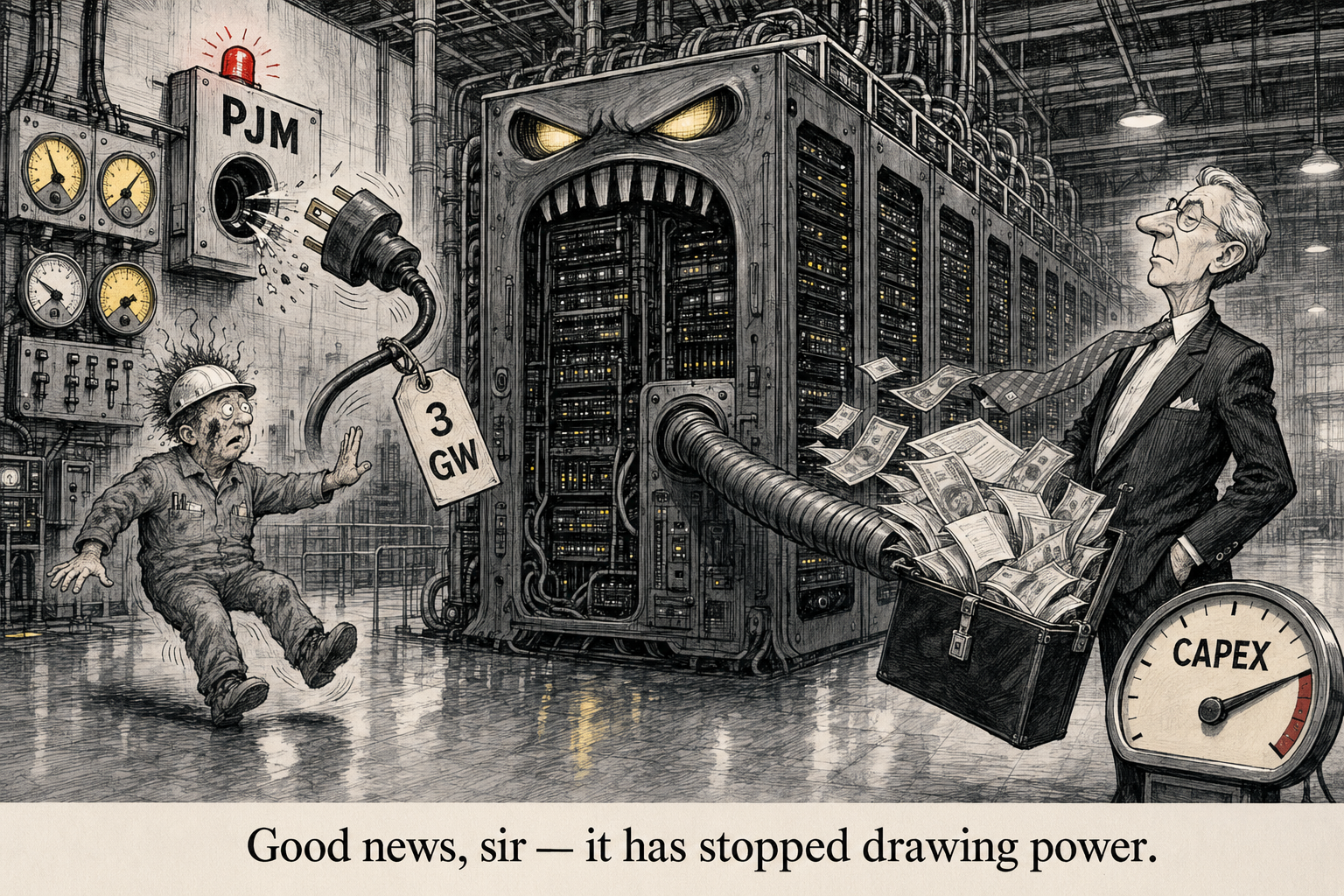
AI's electricity problem has always been framed as a shortage. On Wednesday the largest US grid met the opposite. After a transmission line went out of service in northern Virginia, data centres' own protection systems switched them to backup power and PJM watched more than 3 gigawatts of demand vanish in an instant — about 3% of the grid's entire load. The disturbance was felt from Washington to Chicago; customers reported flickering lights and noises from air conditioners. It took ~ten minutes to stabilise — an eternity on a grid that usually recovers in milliseconds. PJM says reliability was never impaired (Reuters).

The same week, Alphabet raised its 2026 capex guide to $195–205bn after Cloud grew 82% to $24.8bn — and reported negative free cash flow of −$5.9bn, which the company identifies as a first in its public history (Reuters). Tesla's cash went negative too (capex +142% to $5.79bn). And the day before, FERC directed NERC to write binding reliability standards for large "computational loads" by December 31 — the regulator is already moving to treat big data centres more like power plants.

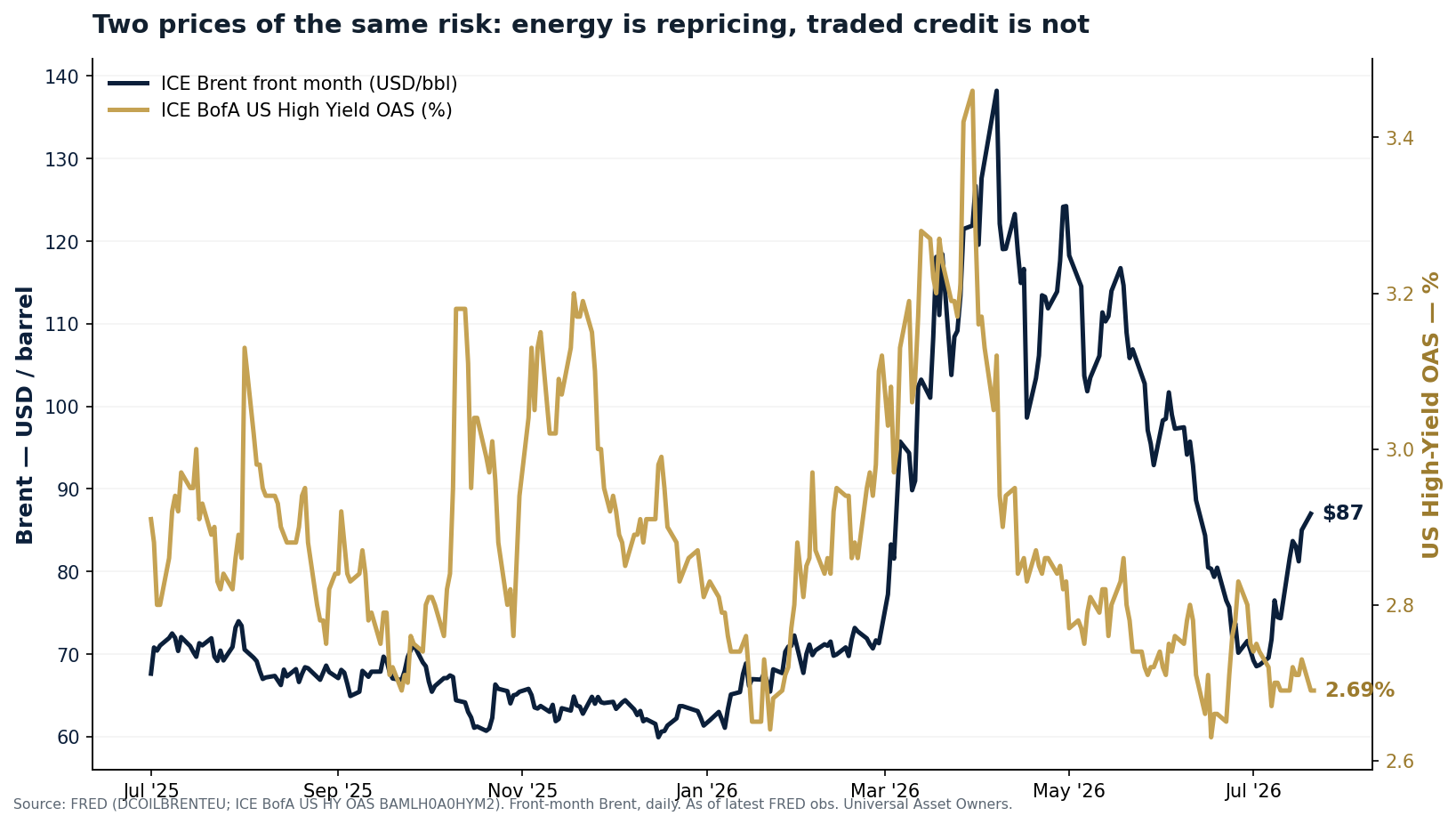
Why it matters. AI infrastructure is now a shared utility and balance-sheet system, and this week showed fragility on both sides at once — physical (loads that disconnect in clusters) and financial (a build funded on now-negative cash into a rising cost of capital: Brent's spot back near $94, euro-area banks tightening). The counter, carried inside: both were contained, and traded risk is still calm (HY OAS 2.69%, VIX 17.05). The new question isn't only "can the grid serve AI?" — it's "can the grid safely lose it?"

Two prices of the same risk: Brent vs US high-yield OAS
Chart of the day: front-month Brent vs. US high-yield OAS. Energy is repricing risk while traded credit is not. Vintage: FRED daily Brent $86.99 (20 Jul) vs. spot $94.13 (22 Jul); HY OAS 2.69%. Source: FRED.
Patient capital into the physical layer

When the public hyperscalers run cash-negative, private capital absorbs the gap — and this week named the financiers. MGX + BlackRock's GIP closed ~$40bn for Aligned's 6.4 GW of data centres (Business Wire). Iberdrola bought 80% of Finland's Caruna grid from KKR and Ontario Teachers' for ~€2bn. Brookfield + CPP took LXP Industrial private for $5.2bn (108 properties). And CPP is widening the foreign lender base of its C$100bn bond programme. A universal owner is long the capex, the energy, the credit — and now the physical correlation of the loads themselves.

Also today

Wellington/Vanguard/Blackstone launched two public-private funds (10% / 3% quarterly repurchase) — democratization redistributes the liquidity mismatch, it doesn't remove it. Africa is using guarantees to unlock up to $4tn of domestic savings for infrastructure. The RBI lifted net forward-dollar sales to a record $106.6bn defending the rupee. And the US and Saudi Arabia signed a 30-year civilian-nuclear "123 agreement" (below the UAE gold standard) — a new leg of Gulf capital formation with a real geopolitical-risk premium. Taiwan's BLF awarded a $3bn ex-China climate-infra mandate; Russia sold ~44t of gold to plug its deficit.

Today's deep dive
When demand can vanish — who pays for the AI build-out

The cash-consumption phase meets a physical-correlation phase. Who intermediates the funding gap — and can the grid absorb both the load and its sudden loss? Plus a four-point allocator action list.

Read the deep dive →
Today's scenario · interactive
The Two-Sided Grid — interactive scenario

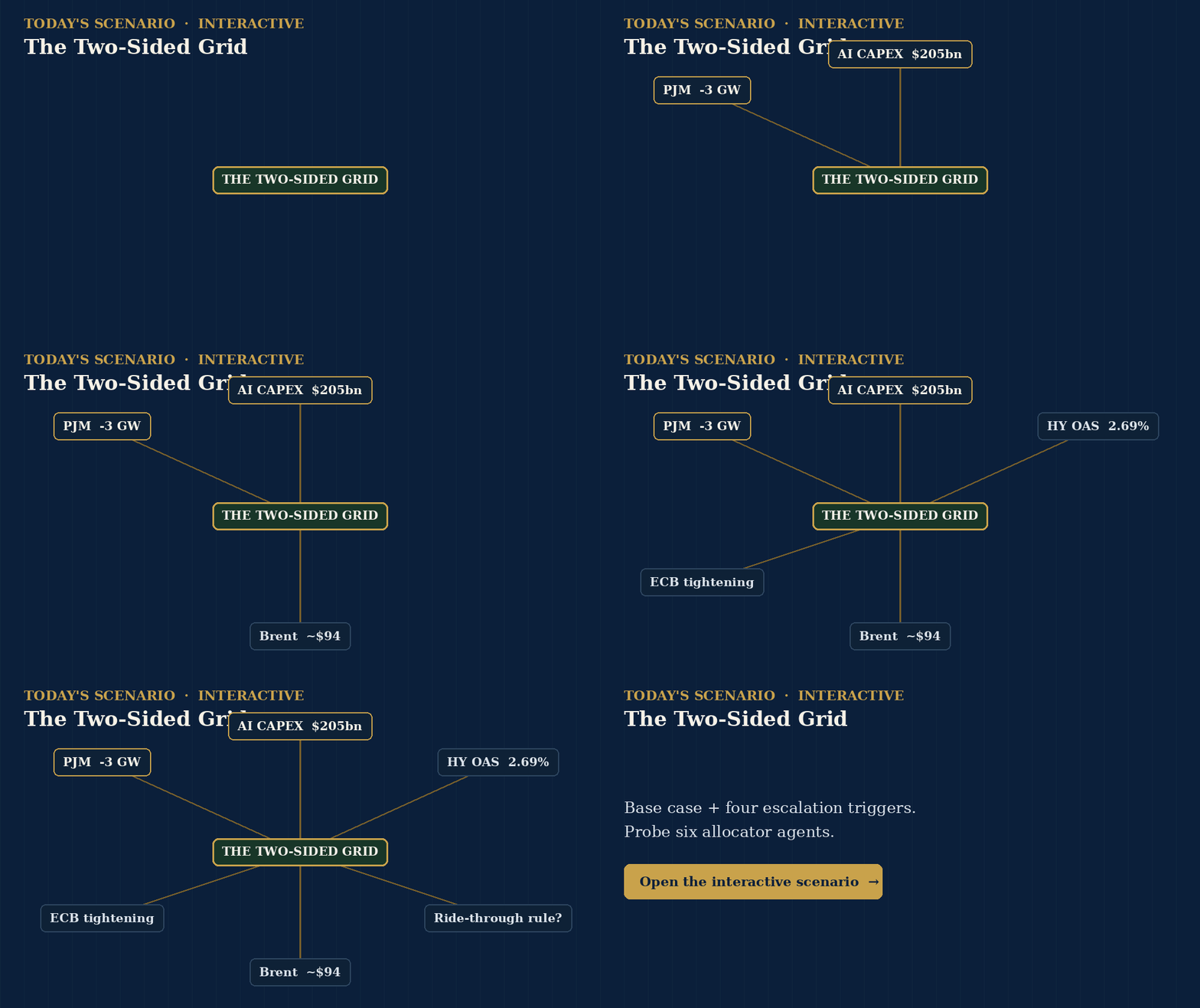
The Two-Sided Grid. Base case: vol and credit stay low; the PJM event is a one-off. Triggers: a second correlated multi-GW disconnection or a FERC/NERC ride-through mandate; Brent above $100 for two weeks; HY OAS gapping +75bp; a hyperscaler cutting capex. Open the interactive scenario →

Sponsor · AssetOps by Corinium
AssetOps — where the buy-side operating community meets.

The operations, data and technology leaders behind the world's largest allocators gather at AssetOps Chicago on 11 August 2026. Solve the operating problems scale can't out-invest.

Register Free →
Listen · The Universal Owner
Today's episode (~3.5 min): why the grid must now be underwritten to lose AI, not just serve it.
▶ Apple Podcasts ▶ Spotify
The Back Page
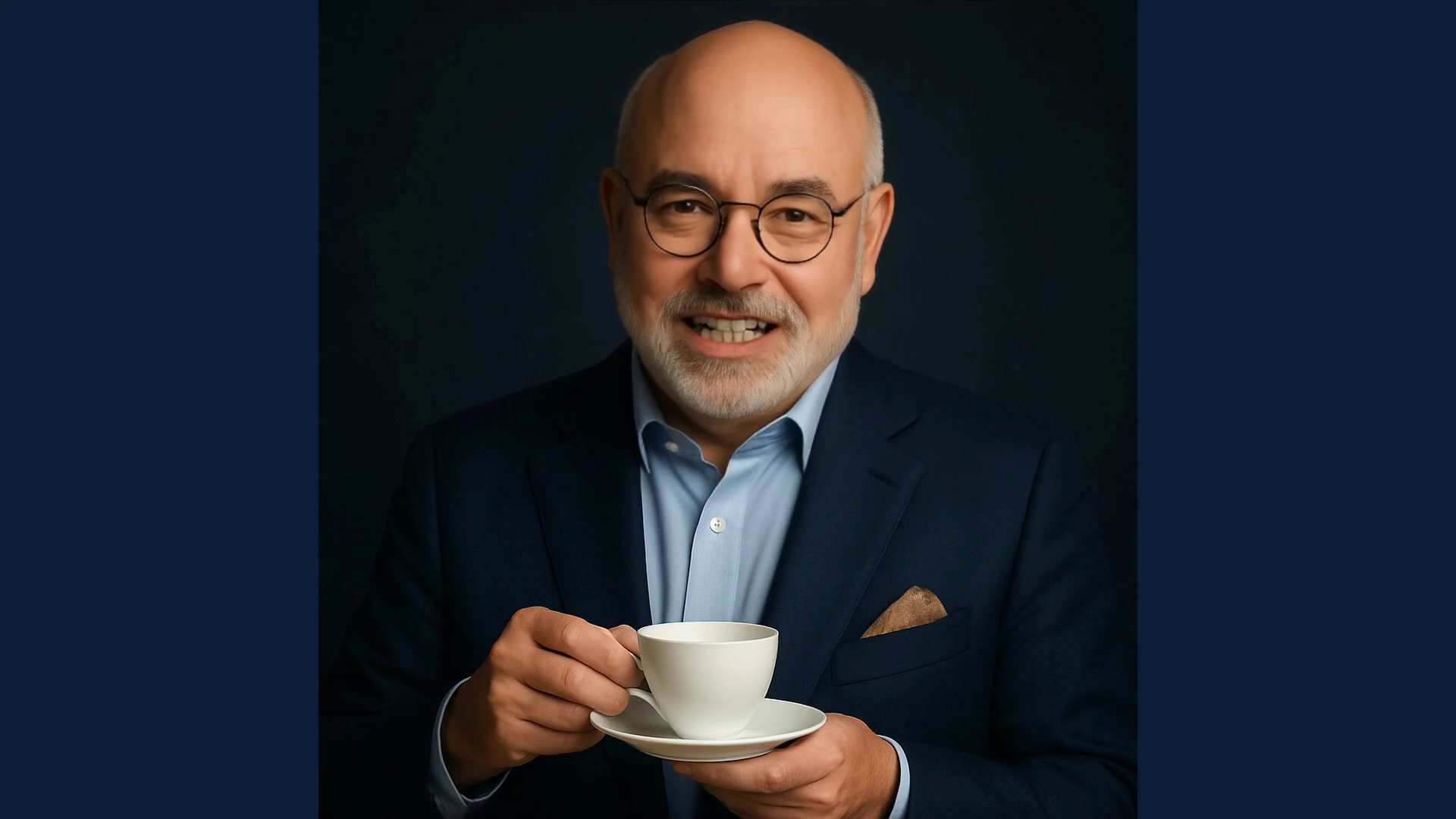
with The Allocator

A lighter look at the week, from the desk of a man who owns a slice of everything — and this week owned the switch on both sides of it.

The Allocator — tap to watchEditorial cartoon: The Allocator rests a hand on a data-centre power lever while the gauge behind him swings to empty

"You own the switch on both sides."

The Allocator — a UAO editorial character.

The Universal Owner
LinkedInXInstagramYouTube
Intelligence for the world's largest long-horizon asset owners. Not investment advice. · info@universalassetowners.com
The Daily Brief

The morning briefing for the people who allocate long-horizon capital.

Research, charts, video and podcast analysis for the institutions investing at the scale of the world.

Universal Asset Owners