Daily Brief
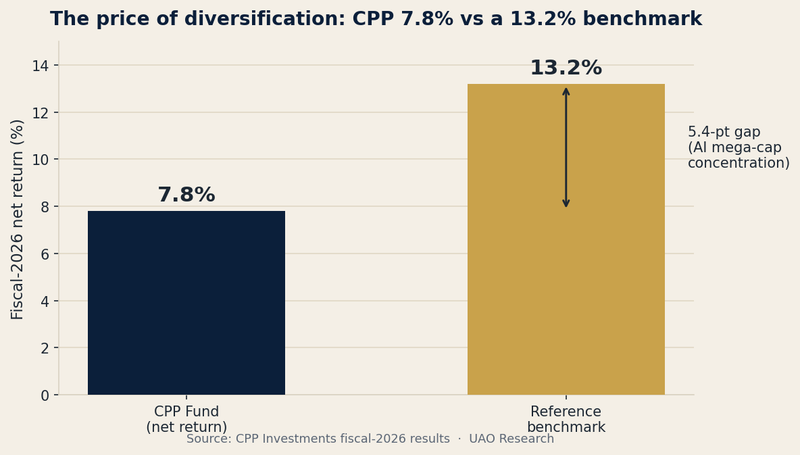
Diversification Worked. It Just Looked Like Korea and Taiwan.
H1 2026 closed with diversification working - but the breadth had migrated to Asia and may already be the next concentration trade.
H1 2026 closed with diversification working - but the breadth had migrated to Asia and may already be the next concentration trade.
Value factor investing systematically targets underpriced equities using financial metrics. Institutional allocators use it as a core equity building block, though recent decade-long underperformance has tested conviction among large endowments and pension funds.
Multi-factor investing combines systematic exposure to proven equity factors to improve portfolio construction. Institutional investors increasingly blend factor tilts with traditional asset allocation for efficiency and risk control.
Currency hedging is a critical risk management tool for asset owners with global portfolios. This guide explains hedging mechanics, cost trade-offs, and governance frameworks used by major pension funds and sovereign wealth funds.
Quality factor investing systematically identifies companies with superior profitability, balance sheet strength, and earnings stability. Leading pension funds and endowments integrate quality screens into core equity allocations to reduce drawdowns while maintaining long-term growth exposure.
Momentum investing—the systematic exploitation of persistent price trends—has become a core component of institutional factor allocation strategies. We examine the mechanism, empirical foundation, implementation challenges, and fiduciary implications for sovereign wealth funds, pension funds, and en
Low volatility investing systematically selects securities with below-average price swings, offering reduced portfolio turbulence without necessarily sacrificing returns. Leading institutional investors have integrated this factor across equity allocations, though its effectiveness depends on market
Smart beta represents a systematic, transparent alternative to both passive indexing and active management, enabling institutional investors to target specific factor premiums through defined rules. Major global asset owners now allocate significant capital to smart beta strategies across multiple a
Risk parity rebalances portfolio construction around equal risk contribution rather than equal capital allocation. Institutional adopters including pension funds and sovereign wealth funds use leverage and diversification to achieve target volatility across stocks, bonds, commodities, and alternativ
Institutional investors increasingly integrate impact mandates into private markets allocations, balancing financial performance with measurable environmental and social outcomes. This guide examines governance, fund selection, and reporting frameworks for asset owners seeking intentional capital de
Institutional investors face a fundamental choice: allocate to real assets for inflation protection and yield, or private equity for capital appreciation. Leading pension funds and sovereign wealth funds now deploy both strategies, reflecting distinct risk-return profiles and portfolio roles.
Institutional asset owners allocating to private markets face material due diligence demands across governance, fees, and operational controls. This framework synthesizes regulatory standards and practitioner experience to establish a replicable checklist.