UAO Daily Brief — The backup routes are becoming chokepoints
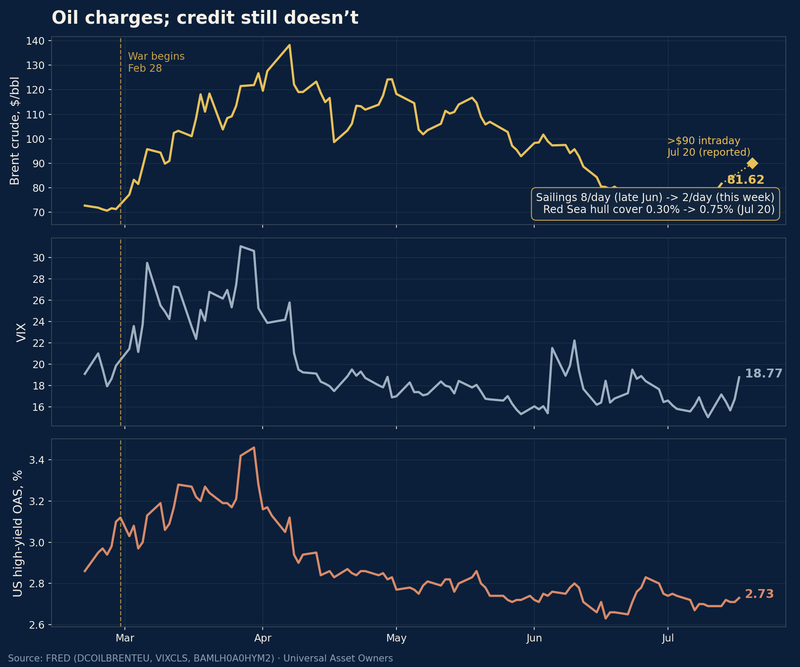
Watch · Today's briefingChart of the day: Brent, the VIX and US high-yield spreads since the war began on 28
Watch · Today's briefingChart of the day: Brent, the VIX and US high-yield spreads since the war began on 28
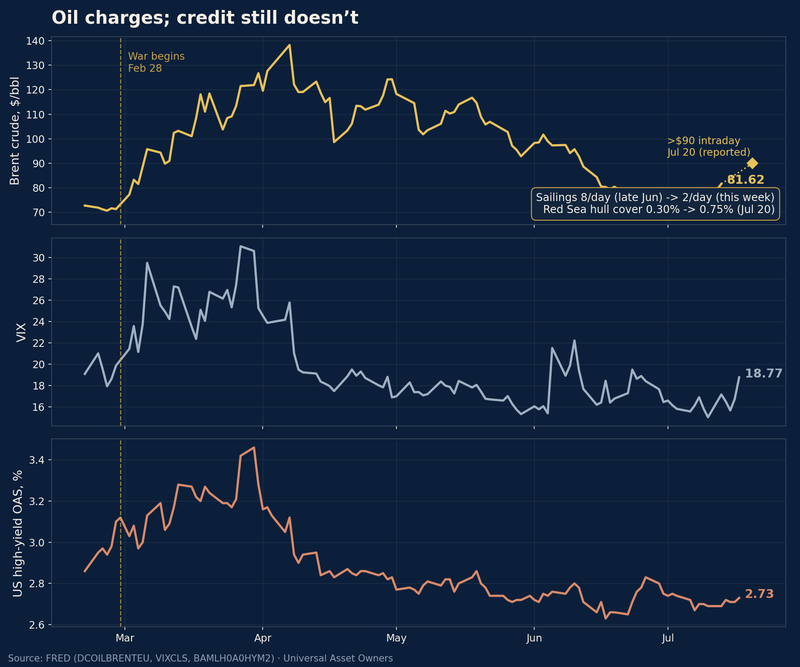
Brent, the VIX and US high-yield spreads since the war began on 28 February. The repricing arrives one asset class at a time: crude and hull cover first, volatility second, credit not yet — HY OAS 2.73% while Hormuz sailings run at 2/day.

Hormuz, the Gulf of Oman transshipment chain and the Red Sea bypass look like three routes. This week they priced like one. How universal owners should count resilience.
The desk's daily read on the structural risks facing owners of the whole market.
Four ships crossed Hormuz Sunday; no LNG since Thursday. 30-yr yields top 5%, gold nears $4,000 — and the sovereign climate trade meets its chokepoint.
Asset owners increasingly demand transparency into how their managers vote shares on their behalf. Manager voting alignment—the match between manager votes and client stewardship priorities—has become a core fiduciary verification mechanism.
Global ISSB adoption accelerated through 2026, with 70+ jurisdictions incorporating International Sustainability Standards Board standards into regulatory frameworks. Implementation timelines and enforcement mechanisms remain fragmented.
Sustainability has shifted from ethical positioning to fiduciary necessity. Major asset owners now frame ESG integration as risk management—identifying material threats to portfolio resilience and returns—rather than impact-driven philanthropy.
Institutional investors face a critical reframing of defence and fiduciary duty in 2026 as regulatory divergence, geopolitical fragmentation, and litigation risk force a recalibration of governance frameworks. Clear legal grounding is no longer optional.
Active engagement correlates with measurable emissions reductions and policy change at portfolio companies, while divestment's effectiveness hinges on capital scarcity and regulatory pressure. New institutional research clarifies the strategic trade-offs.
Norway's $1.7 trillion sovereign wealth fund has institutionalized responsible investment through dual mechanisms: principled exclusions and intensive stewardship. This model has become a reference point for global asset owners navigating ESG integration.
Sovereign wealth fund voting transparency remains inconsistent across major institutions. Norway's GPFG leads disclosure; most Gulf and Asian funds maintain confidentiality policies aligned with their strategic mandates.